Cracked Pool Decks Repaired Before Water Damage Spreads
Concrete Decking Repair in the Hartland Area for cracked surfaces, uneven slabs, and structural pool deck failures
AquaDocs Pool & Spa, LLC provides Concrete Decking Repair to restore cracked, settling, or damaged pool decks that surround residential and commercial pools in the Hartland Area. You rely on the concrete surface around your pool to provide safe footing, proper drainage, and a clean perimeter that keeps dirt and debris out of the water. When cracks open, sections tilt, or joints separate, water begins migrating beneath the slab, eroding the base material and creating trip hazards that worsen with every season.
This service addresses surface cracking, slab settling caused by soil erosion or washout, spalling where the concrete surface flakes away, and separation at expansion joints or coping lines. The work typically involves cleaning out damaged material, re-leveling sunken sections using slabjacking or polyurethane foam injection, filling cracks with flexible sealant or epoxy depending on width and load, and resurfacing worn areas to match the existing finish. Pool decks endure constant exposure to pool chemicals, freeze-thaw cycles, UV radiation, and foot traffic, all of which accelerate deterioration once the surface integrity is compromised.
Reach out to discuss your pool deck condition and schedule an evaluation of the damage and underlying causes.
What Changes After the Concrete Surface Is Repaired
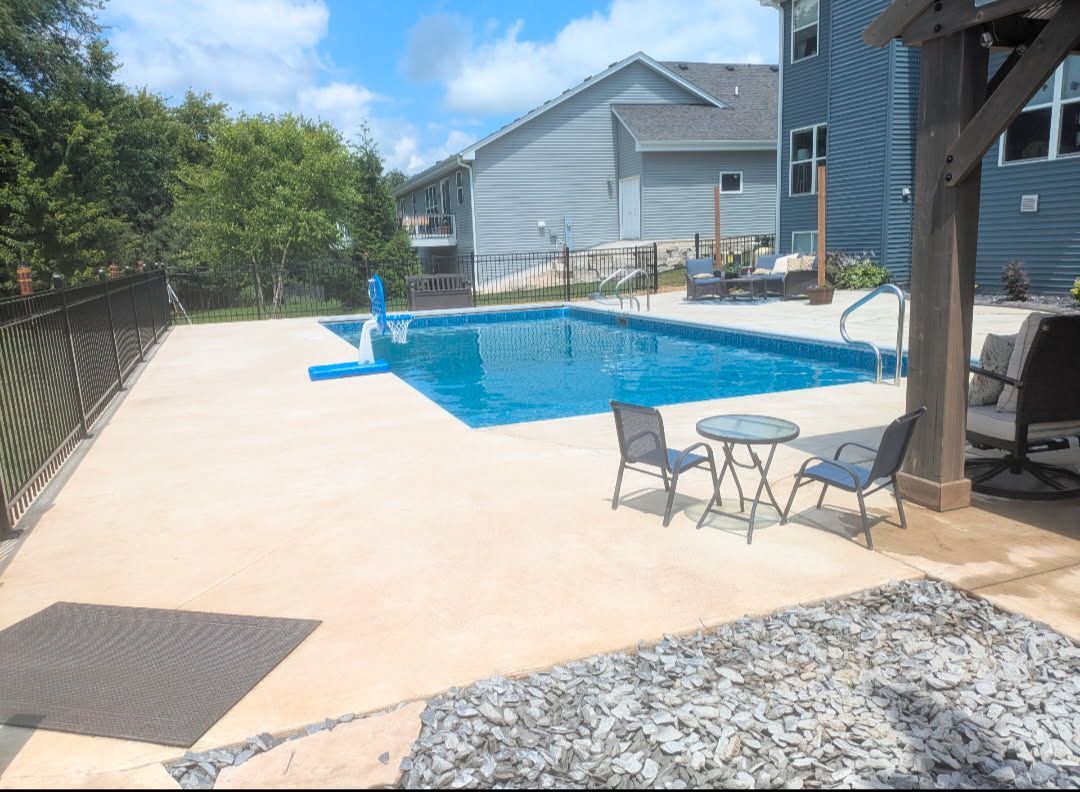
You will see a level walking surface free of gaps where water used to pool or drain under the slab. Repaired decks eliminate the hollow sound when you walk over previously settled sections, and the restored surface prevents further infiltration that leads to additional washout. AquaDocs Pool & Spa, LLC uses repair methods matched to the type and extent of damage, including grinding down lippage where slabs have shifted, injecting stabilizing foam to lift sunken concrete back to grade, and applying polymer-modified overlays when resurfacing is required to restore texture and color uniformity.
After completion, expansion joints function as intended, flex-crack fillers remain bonded even as temperatures fluctuate, and the deck sheds water toward drains instead of allowing it to seep underneath. You will notice that the transition between the coping and the deck sits flush again, reducing the chance of stubbed toes or tripping. If the original surface had a brushed, stamped, or exposed aggregate finish, resurfaced areas are blended to match the surrounding texture so the repair integrates visually.
Repairs do not extend the lifespan of concrete indefinitely, but they do halt active deterioration and restore safe usability. The work does not include full deck replacement, structural modifications to the pool shell, or changes to drainage grading beyond what is necessary to correct settling. If the subgrade has been severely compromised by long-term erosion, additional base stabilization may be required before surface repairs can be effective.
Common Questions About Repairing Pool Deck Concrete
Homeowners often ask about timing, methods, and what to expect during and after the repair process.
What causes concrete pool decks to crack and settle over time?
Water infiltration erodes the soil or sand base beneath the slab, creating voids that allow the concrete to sink. Freeze-thaw expansion, tree root growth, and poor initial compaction also contribute to movement and cracking.
How is sunken concrete lifted back to the correct level?
Technicians drill small access holes and inject expanding polyurethane foam or a cement-based slurry beneath the slab, which fills voids and raises the concrete incrementally until it reaches the target elevation.
When should cracks be sealed versus fully resurfaced?
Narrow cracks under a quarter inch are typically routed and filled with flexible sealant, while wider cracks, spalling, or surface degradation across large areas require overlay resurfacing to restore integrity and appearance.
Why does the deck around the pool settle more than other concrete areas?
Pool decks experience concentrated water exposure from splashing, backwash discharge, and runoff, which accelerates base erosion compared to driveways or patios that stay drier.
How soon can you use the pool after concrete repairs are finished?
Most sealants and overlays cure enough for foot traffic within 24 to 48 hours, though full chemical resistance and load-bearing capacity develop over several days depending on temperature and humidity in the Hartland Area
AquaDocs Pool & Spa, LLC evaluates the deck structure, underlying support, and drainage conditions before recommending a repair approach that addresses both visible damage and the conditions causing it. Contact the team to arrange an on-site assessment and receive a detailed scope of work tailored to your pool deck.